
India–US Space Ties Soar with NISAR Mission
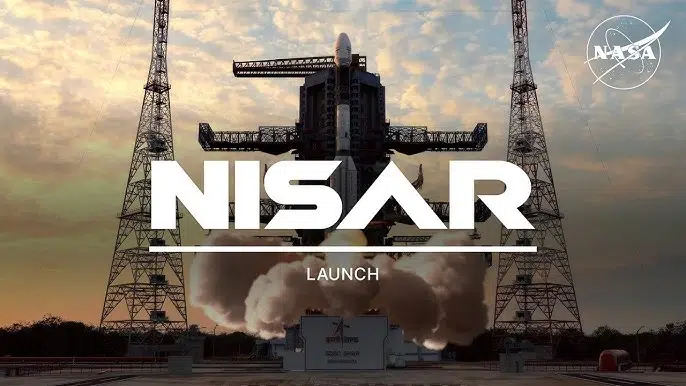
In a landmark moment for global space cooperation, the NASA-ISRO NISAR satellite was successfully launched on July 30, 2025, from the Satish Dhawan Space Centre in Sriharikota aboard ISRO’s GSLV-F16 rocket. The NISAR satellite launch marks a new chapter in Earth observation and space diplomacy, combining technological excellence from both India and the United States.
This mission is hailed as the first joint Earth observation satellite developed by NASA and ISRO, integrating NASA’s L-band radar and ISRO’s S-band radar on a common spacecraft. According to ISRO Chairman S. Somanath, the NISAR project showcases “unprecedented synergy between two spacefaring nations with a shared vision for Earth science and sustainability.”
NISAR Launch Time and Technical Highlights
The NISAR launch occurred at 9:12 AM IST, with the GSLV-F16 rocket lifting the satellite into a sun-synchronous orbit. NISAR is equipped with a 12-meter deployable radar antenna, capable of scanning Earth’s land, forest, ocean, and ice surfaces every 12 days. Its radar system will help scientists monitor:
-
Land deformation and earthquake-prone zones
-
Forest biomass and carbon accounting
-
Crop productivity and water resource mapping
-
Melting polar ice sheets and sea level rise
The satellite is expected to operate for five years, and its data will be freely accessible for global scientific use, benefiting researchers in agriculture, environment, and disaster management sectors.
How India Will Benefit in Business and Industry
The NISAR satellite brings significant potential for India’s economy and space-linked industries:
-
✅ Agritech and Crop Intelligence Startups will gain precise data on soil moisture, crop cycles, and land use — improving farm yields and water efficiency.
-
✅ Disaster Management Firms can build AI solutions using NISAR’s near-real-time data to help governments and insurers respond to floods, landslides, and earthquakes.
-
✅ Carbon Credit and ESG Companies will be able to authenticate forest biomass and emission data using satellite imagery — boosting India’s green economy.
-
✅ Telecom and Infrastructure Planning will benefit from land deformation data that can guide smarter construction and city planning.
-
✅ India’s Private Space Sector can use this momentum to pitch new payloads, data platforms, and hardware for future joint NASA–ISRO missions, boosting exports and investments.
With global visibility and open-access scientific data, NISAR is not just a research tool — it’s a business enabler.


What’s Next for NASA–ISRO Collaborations?
Following the NISAR satellite launch, both agencies are already laying the groundwork for future missions, including:
-
Long-duration human spaceflight initiatives
-
Spaceflight safety and planetary defense strategies
-
Commercial ventures in space tourism, orbital sustainability, and manufacturing
This growing partnership not only strengthens national space programs but also signals new opportunities for Make-in-India space innovation.
ISRO Live Broadcast & Global Buzz
The launch was streamed globally on the ISRO Live platform, drawing viewers from across the scientific and space enthusiast communities. The hashtags #NISARLaunch and #NASAISRO trended globally as NASA and ISRO officials praised the collaboration as “a blueprint for future open-science missions.”